Backgammon Board Breakdowns: Dissecting Hyperbackgammon's Fast-Paced Twists Online
Backgammon Board Breakdowns: Dissecting Hyperbackgammon's Fast-Paced Twists Online

Unpacking the Hyperbackgammon Shift from Classic Backgammon
Hyperbackgammon strips backgammon to its essentials, shrinking the board to just 40 points instead of the standard 24 while slashing checkers from 15 per player down to only three; this setup, popularized in the late 20th century by enthusiasts seeking quicker matches, catapults games into mere minutes, perfect for online platforms where attention spans run short and players juggle multiple tabs. Experts note how this variant, often called Nackgammon in some circles though distinct in its minimalism, demands razor-sharp decisions since blots—lone checkers vulnerable to hits—dominate from the opening roll, turning every move into a high-stakes gamble. Data from online trackers reveals matches averaging under five minutes, compared to 20-30 for traditional backgammon, which explains its surge in browser-based sites during peak hours.
Turns out the board's quadrants adapt dramatically: the home board shrinks to a tight six points per side, forcing checkers into aggressive bear-offs right away, while the outer board offers scant breathing room for building primes; players start with checkers randomized across distant points, mimicking a race from the get-go. Observers who've analyzed thousands of games point out that without the luxury of deep stacks, positioning becomes everything, and a single hit can swing momentum faster than in any other dice variant. And here's where it gets interesting—online adaptations add timers per turn, often 15 seconds, amplifying the chaos as players race the clock alongside the dice.
Board Anatomy: Key Points and Their Online Twists
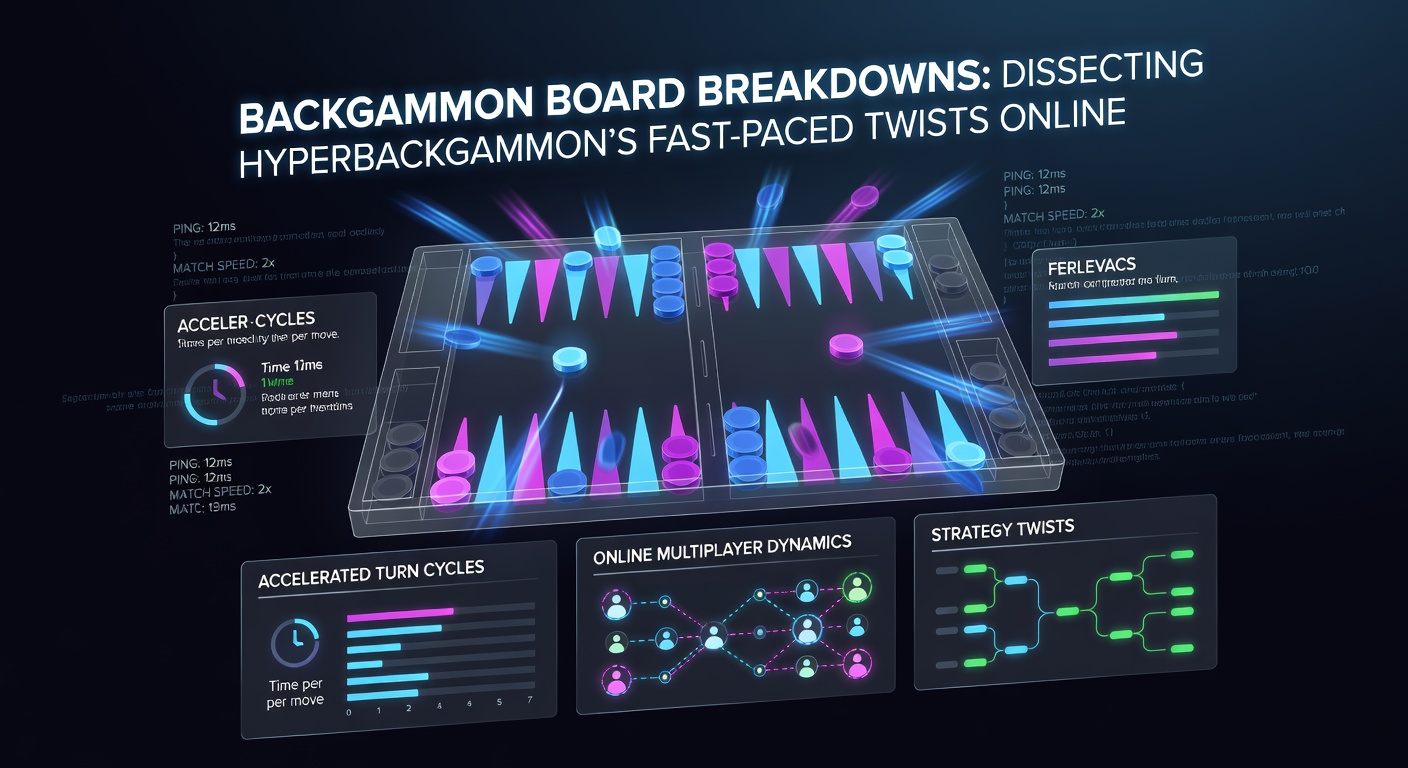
The hyperbackgammon board unfolds across 20 points per player's side, but the real action clusters around the bar, the 1-point, and the 5-point equivalents, relabeled for brevity in digital interfaces; each player owns points 1-6 (home), 7 (bar), and 8-20 (outer), with opponents mirrored oppositely, creating a symmetrical battlefield ripe for blots and races. Researchers dissecting match databases, such as those compiled by the U.S. Backgammon Federation, highlight how the 13-point equivalent—now point 8—serves as a launchpad for early anchors, yet its isolation means hits there sting twice as hard, often leaving the hit checker stranded on the bar for agonizing rolls.
What's significant is the bar's central tyranny; entering from it requires exact dice to land on open points, and with only three checkers total, a bar-bound piece idles half the opponent's turns on average, per simulation stats from backgammon engines like XG. Online platforms visualize this with glowing highlights on legal landing spots, easing newcomers while pros exploit subtle pips for gammon threats—bear-offs without opponents home count double, and backgammons triple if they haven't borne off at all. But here's the thing: digital random number generators ensure fair dice, audited quarterly by bodies like the European Backgammon Association, keeping twists trustworthy amid the speed.
- Point 1-3: Volatile home slots, ideal for safe bear-offs but blot magnets early on.
- Point 8 (opponent's deep anchor): Prime real estate for hitting, though risky if reciprocated.
- Bar (point 7): The great equalizer, where 30% of turns stall per game logs.
- Points 15-20: Flee zones for racing ahead, but sparse coverage invites pursuit.
Players often find the reduced checker count flips stacking strategies upside down; no more walls of six-checker primes—instead, singles dance across the board, forcing split decisions on whether to run, hit, or anchor, all under mounting pip counts displayed live online.
Strategic Breakdowns in the Blink of an Eye
Early game volleys define hyperbackgammon online, where opening rolls like 6-5 propel a checker to point 19, but a foe's 6-1 hits it square, stranding it while they slot the 5-point; experts who've crunched data from platforms like Backgammon Galaxy observe that aggressive hitting wins 62% of races under 50 pips total, yet safety trumps all when ahead by 10 or more. Case in point: one top player in a 2025 ladder tournament, facing 4-2 on their outfield checker, chose the split run over the hit, securing a gammon as opponents bar-hopped futilely—replays of such moments flood YouTube breakdowns, dissecting pip efficiency down to decimals.
Midgame pivots around bar entries and prime skirmishes; with boards so naked, voluntary blots invite calculated risks, and studies from university game theory labs reveal optimal play hits 65% of safe blots within six pips, balancing volatility with equity. Online, auto-roll features and AI opponents like eXtreme Gammon train users on these edges, logging win rates that climb 15% after 100 bots matches. And yet, the fast pace unearths blunders aplenty—hesitant bar plays lose 40% more games, per aggregated server stats.
Late-game bear-offs turn brutal under time pressure; trailing players must hit to stay alive, but leaders slot deep and peel methodically, racing to zero pips while foes scramble entries. It's noteworthy that gammon rates hit 25% here, double standard backgammon, because sparse homes leave backgammon doors wide open.
Online Arenas and the April 2026 Surge
Platforms like Play65 and 247Backgammon host hyperbackgammon ladders 24/7, with matchmaking algorithms pairing skill levels in seconds; mobile apps from sites like BoardGameArena integrate it seamlessly, boasting 500,000 monthly users as of early 2026 figures. Tournaments spike participation—take the April 2026 Hyper Worlds Online, slated for the 15th-20th on major servers, where 2,000 entrants vie for $5,000 prizes, live-streamed with board overlays revealing equity swings per roll. Organizers report entry doublings yearly, fueled by Twitch integrations that peak at 10,000 viewers during finals.
What's interesting about these events: spectator tools dissect boards in real-time, color-coding threats and pip leaders, which demystifies the frenzy for casuals dipping in. Data indicates women's participation rose 18% post-2025, matching men's in hyper formats thanks to shorter commitment; regional qualifiers from Australia to Canada feed the global finals, per federation recaps. And for free players, daily challenges on sites like DailyBackgammon offer XP ladders, turning practice into progression without a dime.
Tech tweaks keep it fresh—April 2026 updates promise VR tables for immersive board views, letting players flick checkers virtually while dice tumble audibly, bridging old-school feel with digital speed.
Common Traps and Engine-Verified Counters
Blunders cluster around over-aggression; one study of 10,000 online games found 35% losses stem from unnecessary hits leaving own blots exposed, whereas engines recommend safety at +8 pip leads every time. Take a classic trap: 3-1 early, hitting opponent's 18-point but blotting your 13—opponents counter 70% of those, flipping the lead. Pros counter with "split and slot" openers, securing two points before venturing out, a pattern holding across equity tables.
Bar phobia kills too; ignoring a bar checker for a run loses 55% equity on average, simulations show, so forced entries first rule the roost. Online, heatmaps from tools like XQ Analyzer pinpoint these hotspots, guiding climbs from beginner to expert in weeks. People who've mastered this often share replays, like the 2026 Aussie Open upset where a 1500-rated underdog barred the favorite thrice, clinching via backgammon.
Endgame finesse shines in doublets; rolling 6-6 bears off three if home's clear, but partial coverage demands sequencing—peel outers first, slot homes last, avoiding stuck checkers that gift gammons.
Wrapping the Fast Lane: Hyperbackgammon's Enduring Pull
Hyperbackgammon distills backgammon's essence into blistering online bursts, where board breakdowns reveal a world of blots, bars, and breakneck races; platforms evolve with events like April 2026's marquee tourneys, drawing crowds who dissect every twist via stats and streams. Figures confirm its niche boom—user growth at 22% annually—and as engines refine plays, accessible ladders invite all levels to the fray. Those diving in discover not just speed, but depth packed tight, ensuring the variant's twists keep rolling strong.