Data Reveals Distinct Player Habits in Online Chess, Backgammon, and Party Games
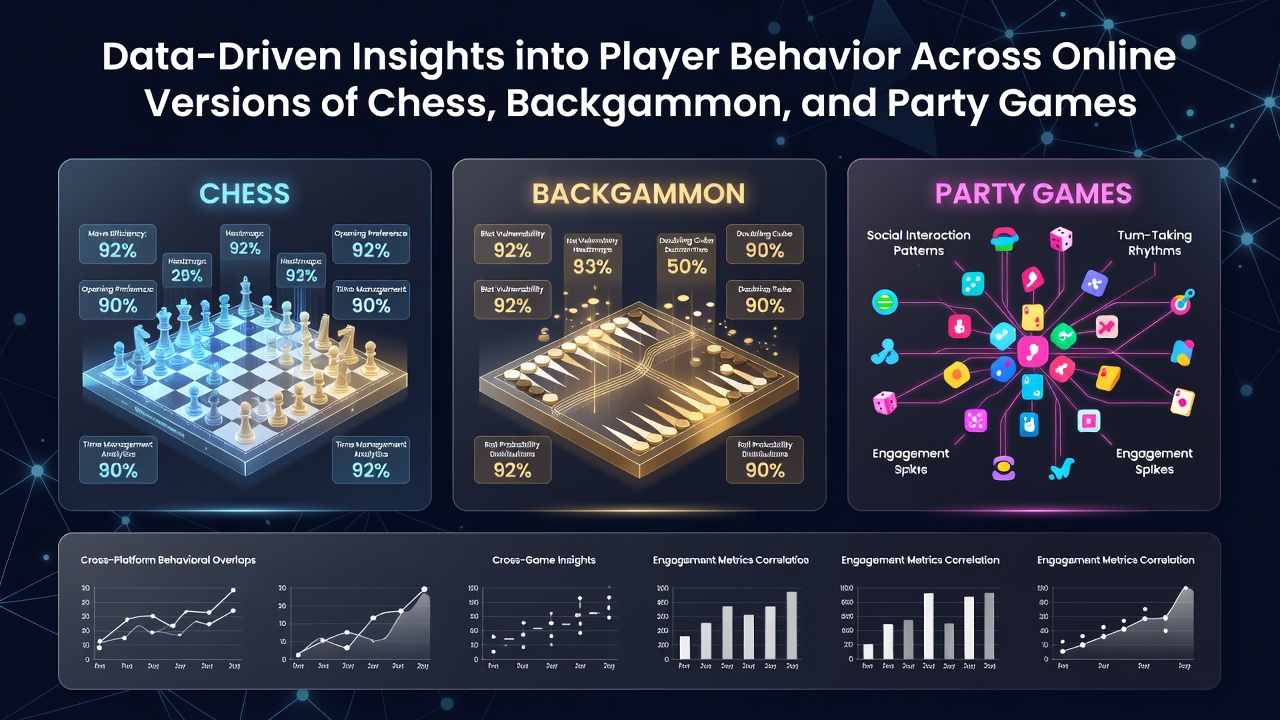
Platforms tracking online chess have compiled extensive datasets that highlight consistent patterns in how participants approach matches, with many users favoring rapid time controls during evening hours while others gravitate toward longer formats on weekends according to aggregated server logs from major sites.
Chess Engagement Trends Across Platforms
Researchers examining millions of games note that chess players often begin with short blitz sessions before transitioning to classical formats as their skill ratings climb, and this progression appears in data spanning several years of activity where average game duration increases alongside user tenure. Studies from academic institutions such as those affiliated with the International Game Developers Association show that retention rates improve when platforms introduce personalized opening recommendations based on past move selections, leading to higher completion rates for tutorial-integrated matches.
Observers note that peak activity clusters around specific time zones, particularly in regions with strong competitive scenes, while casual participants tend to log shorter sessions interrupted by external factors like notifications from other apps, yet the overall volume of daily games continues to rise steadily through mid-2026.
Backgammon Session Dynamics and Risk Patterns
Backgammon analytics reveal that players frequently adjust doubling cube usage based on match length, with shorter online variants prompting more aggressive early doubles compared to traditional formats where caution prevails in later stages, as evidenced by move-by-move telemetry from established digital tables. Data collected across European servers indicates that users who review post-game statistics show measurable improvement in cube decision accuracy within weeks, suggesting feedback loops play a key role in skill development.
June 2026 figures from North American platforms highlight a surge in backgammon participation during holiday periods, driven by social features that allow spectators to join ongoing matches and offer real-time commentary, which in turn extends average session times beyond those recorded in solo play modes.
Party Games and Social Interaction Metrics
Party game environments generate distinct behavioral signals centered on group dynamics, where participants exhibit higher chat volumes and emoji usage during cooperative rounds versus competitive ones, according to logs analyzed by research teams at Canadian institutions focused on digital entertainment studies. These interactions correlate with repeat visits when platforms incorporate voting systems for rule variations, encouraging broader experimentation among mixed-skill groups.
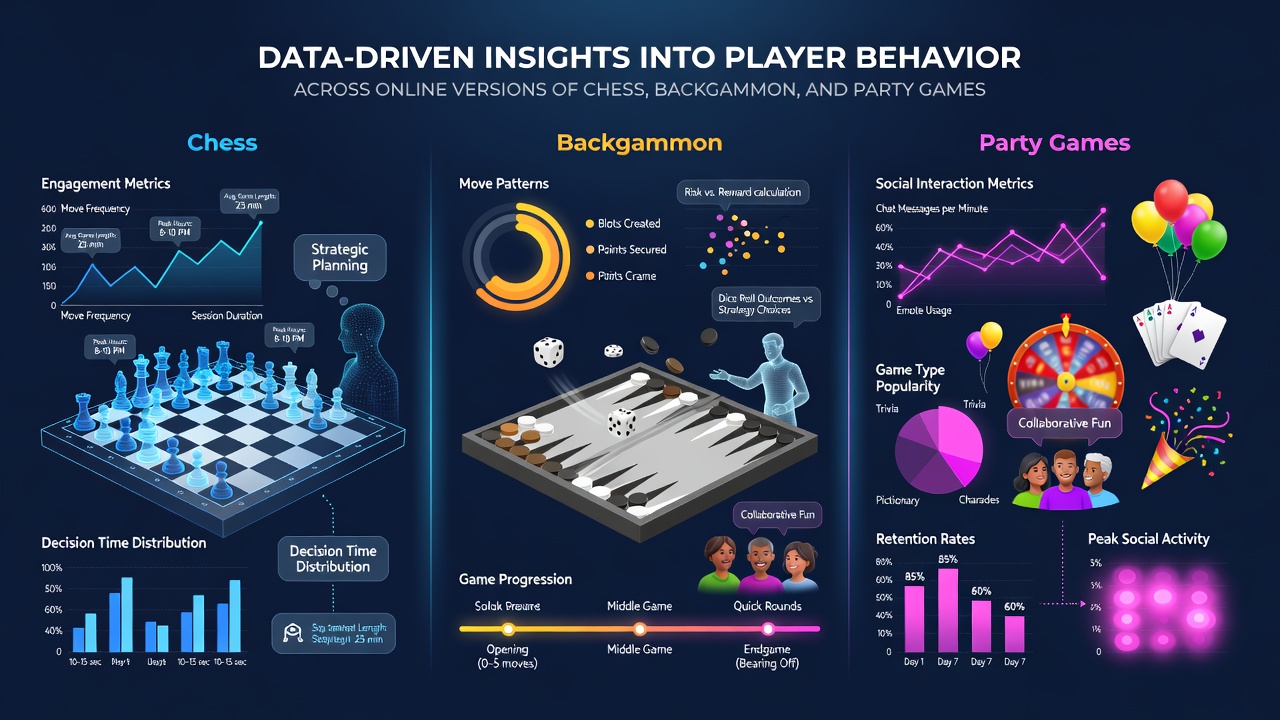
Cross-genre comparisons show that party game users often interleave quick rounds with longer chess or backgammon commitments on the same account, creating hybrid play histories that platforms use to refine matchmaking algorithms and reduce wait times for balanced lobbies.
Comparative Insights from Aggregated Data
Combined datasets across the three genres demonstrate that chess maintains the highest average moves per session while backgammon features more variable game lengths due to luck elements, whereas party titles emphasize social retention factors over pure strategic depth. Reports compiled by organizations tracking global gaming trends point to increasing integration of AI-assisted analysis tools that help users identify personal weaknesses without disrupting flow, particularly effective in backgammon where probabilistic outcomes require repeated exposure to build intuition.
Those monitoring platform growth observe that mobile access accounts for a growing share of total playtime in all categories, with touch-optimized interfaces supporting seamless transitions between genres during commutes or brief breaks, and this shift aligns with broader adoption patterns noted through 2026.
Conclusion
Overall patterns extracted from large-scale telemetry underscore how genre-specific mechanics shape engagement, with chess rewarding deliberate study, backgammon balancing chance and strategy, and party games thriving on communal elements that sustain longer community involvement across diverse user bases.