From Casual Domino Play to Cash Prize Stages: Mapping the Progression
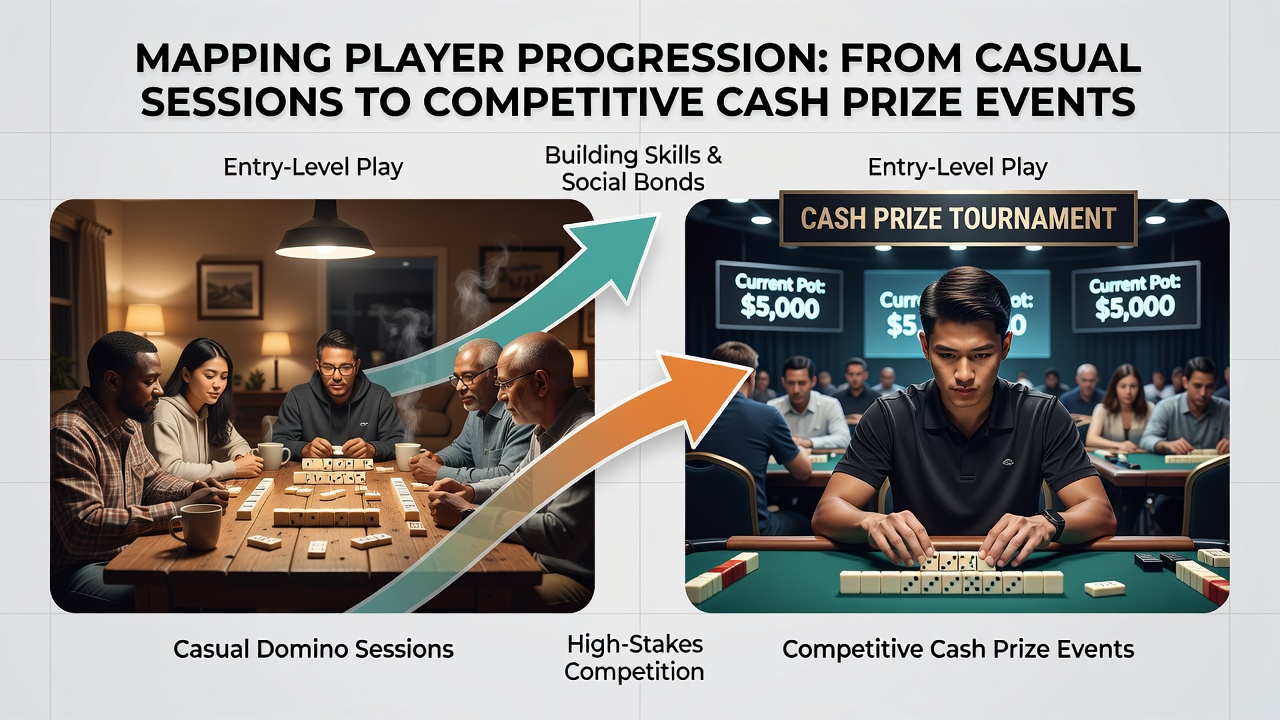
Domino players often begin with informal matches that emphasize social interaction and basic rule familiarity, yet many advance through structured stages toward events offering cash prizes. This progression involves skill development, platform selection, and competitive exposure, with patterns observed across regions where online formats accelerate movement between levels. Data from industry reports indicates steady growth in such transitions, particularly as digital tools connect local groups to broader circuits.
Early Foundations in Social and Rule-Based Play
Initial sessions typically occur in home settings or community centers where participants learn tile matching, scoring systems, and turn mechanics without financial stakes. Observers note that repeated exposure builds pattern recognition and strategic thinking, elements that researchers link to later performance in organized play. Those who've studied player behavior point out that consistent casual involvement correlates with quicker adaptation when rulesets expand to variants like double-six or double-nine configurations.
Community leagues add another layer, introducing scheduled rounds and basic record-keeping that prepare individuals for larger fields. Figures from gaming associations reveal that participants who join these groups show higher retention rates when shifting to digital environments, since familiarity with pace and etiquette transfers directly. And the reality is that many regions host weekly gatherings that serve as entry points without requiring travel or fees.
Skill Refinement Through Practice and Analysis
Advancement requires deliberate practice beyond random matches, including study of probability distributions and blocking techniques that data shows improve win percentages over time. Players frequently review past games via apps or logs to identify weaknesses, a method academic studies associate with measurable gains in tournament settings. What's interesting is how this phase often overlaps with online free-play modes that simulate higher-pressure conditions while eliminating monetary risk.
Training resources such as strategy guides and recorded matches further support this stage, allowing individuals to compare approaches across different experience levels. Research indicates that those dedicating regular hours to these methods reach competitive readiness faster than peers relying solely on unstructured sessions. Yet progress remains individual, influenced by factors like access to opponents and willingness to adjust tactics based on feedback.
Transition to Digital Platforms and Broader Exposure
Online environments mark a common bridge, where free versions of domino games introduce matchmaking systems and rating mechanics that mirror tournament structures. Reports from the European Gaming and Betting Association highlight increased participation in these spaces during recent years, with users progressing from unranked rooms to leaderboards that signal readiness for paid events. Platforms often include tutorial modes and statistics tracking that quantify improvement without immediate financial commitment.
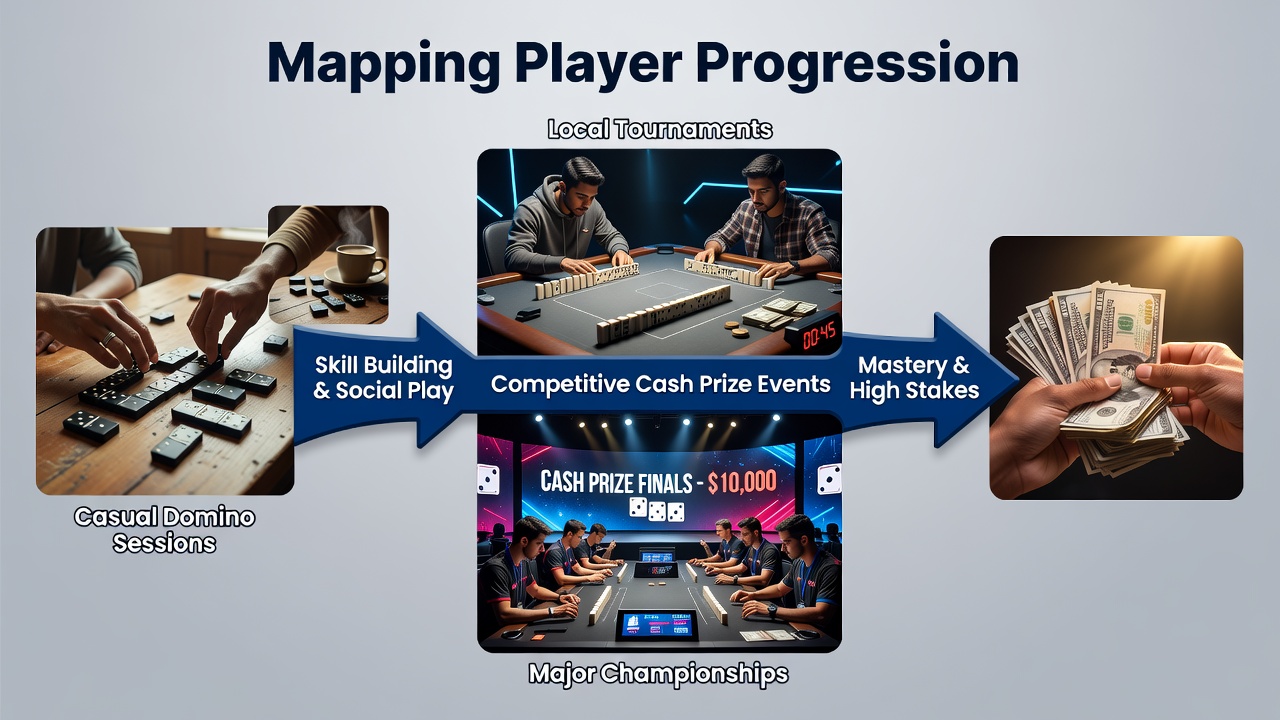
Regional differences appear in platform preferences, as some areas favor apps with integrated social features while others emphasize speed-based formats. Those monitoring trends note that June 2026 features expanded online qualifiers tied to international circuits, providing additional pathways for players who have accumulated sufficient ratings through consistent digital play. This setup allows geographic barriers to diminish as participants from varied locations compete under unified rules.
Entry into Cash Prize and Tournament Circuits
Once ratings stabilize and experience accumulates, many shift toward cash-enabled events that range from small buy-in matches to larger prize pools. Regulatory frameworks in places like Nevada and parts of Australia govern these activities, ensuring standardized payout structures and participant verification processes. Industry data shows that successful transitions often involve gradual increases in stake levels rather than abrupt jumps, reducing variance impact during adaptation periods.
Tournament calendars incorporate satellite events that feed into main draws, creating clear routes documented in association publications. Observers note that preparation at this point includes mental conditioning alongside technical skills, since cash formats introduce elements like bankroll management absent from casual settings. And examples from North American circuits demonstrate how players who document their progression through multiple tiers achieve more stable results when stakes rise.
Conclusion
The path from casual domino sessions to cash prize competitions follows observable stages centered on skill accumulation, platform engagement, and competitive exposure. Data continues to track these movements, offering insights into how digital tools and organized events reshape participation patterns across different markets. Those examining the landscape find consistent emphasis on incremental advancement supported by available resources and regulatory clarity in established regions.